
The Galileo ProjectA Scientific Search for Unidentified Objects in Our Skies
LATEST NEWS
All News
New paper on chemical classification of IM1 spherules published in Chemical Geology
Expedition team lead by Harvard astrophysicist Avi Loeb uncovers unprecedented materials from impact site of 2014 interstellar object
Read the storyRichard King Mellon Foundation awards $575,000 to Galileo Project
Generous grant from Richard King Mellon Foundation to fund establishment and operation of a third instrument station in Pennsylvania
Peak-Brightness Localization of the CNEOS 2014-01-08 (IM1) Fireball
In a recent preprint, Fernando et al. (2024) used public data from infrasound stations to constrain the localization of the fireball of the CNEOS …
Interstellar meteors may have formed from extreme tidal disruption events
New paper proposes violent beginnings for high-velocity interstellar meteors such as IM1
Our research
Scientific and technical work produced by Galileo Project researchers.
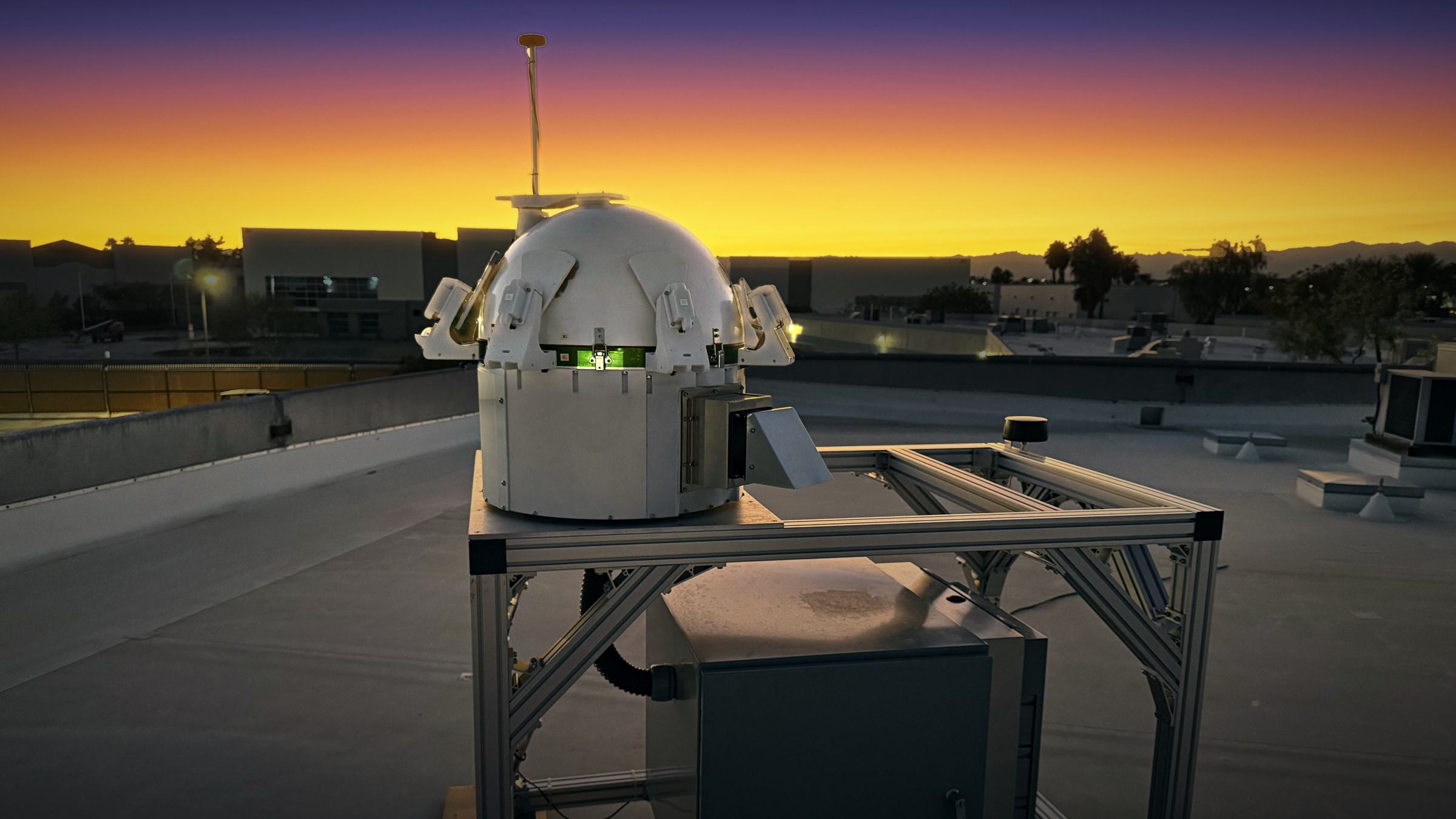
All PublicationsGalileo Project’s Observatory Class System Architecture
arXiv preprint
An investigation of the relationship between morphology and chemistry of the D-type spherules from the recovery expedition of the CNEOS 2014-01-08 bolide: Implications for origins
Chemical Geology
The deployment of a geomagnetic variometer station as auxiliary instrumentation for the study of Unidentified Aerial Phenomena
arXiv preprint
Commissioning An All-Sky Infrared Camera Array for Detection Of Airborne Objects
Sensors
LATEST VIDEOS
View channel on YouTube
A Hidden World Was Just Found Beyond Pluto


LATEST ESSAYS
Read more on Medium-
Is There Life in Liquid Water Now on Mars at a Depth of 5 to 10 Kilometers, and Could We Find It?
On Earth, deep subsurface life extends several kilometers down and may hold a comparable biomass to everything on the surface. Bacteria have been…
-
Is UAP Storytelling Akin to Religious Myths?
A system of statements based on conviction rather than evidence is closer to religion than it is to science. Of course, I know of many scientists who…
-
Our Cosmic Archaeological Dig
The Universe started with nearly the same initial conditions in all directions and distances. As a result, cosmic time was nearly synchronized…
-
Discovery of a Dwarf Planet Candidate in the Outer Solar System by the NSF-DOE Rubin Observatory
The NSF–DOE Vera C. Rubin Observatory discovered a new dwarf planet candidate, named 2026 ED138, in the outer Solar System beyond the orbit of Pluto…
-
Our Cosmic Roots
Today, I responded with answers (A) to the following questions (Q): Q: What do you see as the most consequential uncertainty in our understanding of…
Get involved
Contribute to rigorous, evidence-driven research through support, collaboration, and participation.